Leaves, moss and general debris build up in gutters all year, but autumn leaf fall is when most blockages happen. A gutter that goes into winter clogged can overflow in heavy rain, sending water down render or brickwork. In a cold snap, trapped water can freeze and put extra strain on the gutter and its fixings.
When to book
For most homes, late October to November is the most useful time: the bulk of the leaves are down, and the gutters are clear before the worst of the winter weather. Homes close to mature trees often benefit from a second clear in spring, when seeds, blossom and moss have had time to build up.
A blocked gutter is still worth sorting whenever you notice it. Water spilling over the edge does damage in any season.
Signs your gutters are blocked
- Water pouring over the edge of the gutter during rain, often above the front door.
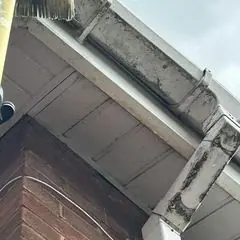
- Green or dark streaks on the wall, fascia or soffit below the gutter line.
- Plants or moss growing out of the gutter.
- A downpipe that stays dry or only trickles during heavy rain.
- Damp patches on inside walls near the roofline.
What causes blockages
Individual leaves rarely cause the problem on their own. They break down into a wet sludge with moss, seeds and grit washed off the roof, and that sludge settles at the lowest point of the run, usually around the outlet to the downpipe. Once the outlet is blocked, the whole run fills and overflows.
What a proper gutter clearance includes
- Every run cleared end to end, not just the sections you can see from the ground.
- Outlets and downpipes checked so water can actually get away.
- Waste bagged and removed rather than left on the drive or lawn.
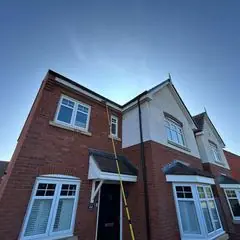
We vacuum gutters out from the ground, then run a camera check to make sure every downpipe is flowing before we leave.
Want a quote? Send a photo and your postcode on WhatsApp and we’ll come back with a price, usually the same day.