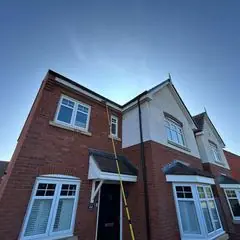
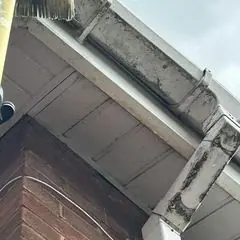
Used carelessly, high pressure can force water behind render, strip painted finishes and erode the softer mortar joints on older brickwork. That is why render and brick should not be cleaned the same way as a concrete driveway.
How pressure washing damages walls
- Render. A narrow, high-pressure jet can open hairline cracks and push water behind the render, where it can cause blowing or damp later on.
- Painted finishes. Masonry paint can be stripped in patches, leaving an uneven, blotchy wall.
- Mortar joints. Older lime or soft sand-and-cement pointing can be washed out of the joints.
- Soft bricks. The face of older, softer bricks can be eroded, exposing the more porous material underneath.
What soft washing is
Soft washing combines low pressure with a cleaning solution suited to the surface. The solution breaks down algae, lichen and organic staining, and a gentle rinse carries it away. Because the work is done by the solution rather than the force of the water, it lifts growth without the same risk to the render or pointing.
Different renders need different treatment
Modern silicone and acrylic renders behave differently to older sand-and-cement or pebble-dash finishes, and the condition of the pointing matters on brickwork. The right method depends on what is actually on your walls, which is why it is worth asking before anyone starts.
Questions to ask before booking a render clean
- What method will you use on my type of render or brick?
- What pressure will be used, and where?
- Will windows, doors and plants be protected from the cleaning solution?
- How long before the result settles? Some staining continues to fade for a few days after a soft wash.
A reputable cleaner should be able to answer all of these clearly for your specific walls.
Want a quote? Send a photo and your postcode on WhatsApp and we’ll come back with a price, usually the same day.