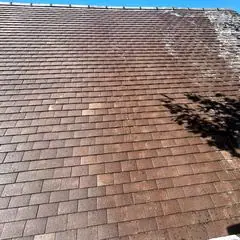
Moss and lichen on a pitched roof are mostly a cosmetic, slow-moving problem at first. Left alone, though, they hold moisture against the tiles, lift the edges as they grow, and wash down into the gutters where they cause blockages.
When roof moss becomes a problem
- Thick cushions of moss that lift the bottom edges of tiles.
- Gutters that keep filling with moss and grit washed off the roof.
- Tiles that stay dark and damp long after rain has stopped.
- In freezing weather, moisture held by the moss expanding as it freezes.
Why pressure washing a roof is risky
A direct pressure jet can crack older or more brittle tiles, strip the surface layer from concrete tiles, and drive water up and under the tiles into the roof space. It also blasts moss and debris everywhere, including into the gutters.
How a low-pressure moss treatment works
We treat the roof with an HSE-licensed biocide, then rinse at low pressure, working carefully to keep the risk of cracking or dislodging tiles to a minimum. The biocide keeps working after the job is finished, so regrowth is slower than after a scrape-only clean. It works on natural slate and concrete tiles alike, and clears lichen as well as moss.
It can take a little longer to see the full result than a pressure wash would, but it is far gentler on ageing roofs and the waterproof layer beneath the tiles.
After the roof is cleaned
- Have the gutters cleared at the same time, since moss from the roof ends up in them.
- Expect some treated growth to keep fading and washing away with the rain over the following weeks.
- Cut back overhanging branches where you can; shade and leaf litter are what let moss return quickly.
Want a quote? Send a photo and your postcode on WhatsApp and we’ll come back with a price, usually the same day.